Do I need to know how to code to join?
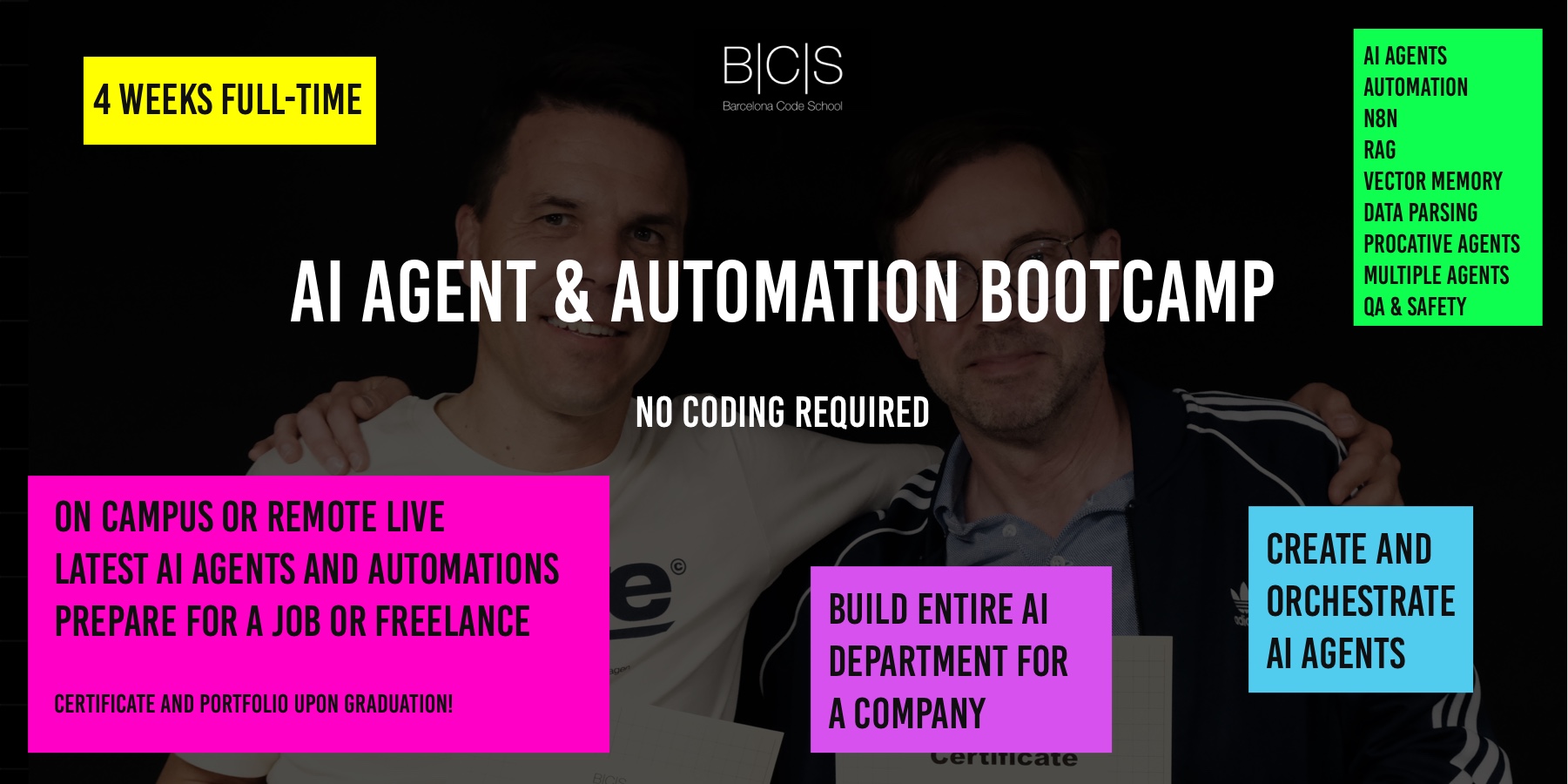
No. This is a no-code course. The main tool, n8n, lets you build automations from visual building blocks. You need to be a confident computer user - comfortable with browsers, files, and web apps - but you do not need any programming experience.
Can I attend remotely?
Yes. The course is available both on campus in Barcelona and as a remote live option. Remote students join the same live sessions in real time with the same instructor and group.
What are the daily hours?
The course runs Monday to Friday, 9:00 to 18:00 CET. It is a full-time, intensive program - 20 sessions of 8 hours each, 160 hours in total over 4 weeks.
How many students are in each class?
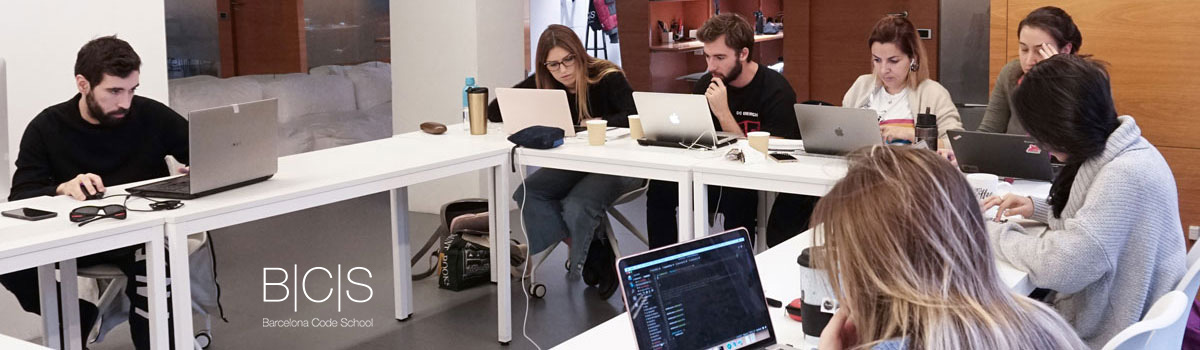
Groups are small, 6 students maximum, so you get direct, personalized attention from the instructor every day. After lunch the instructor works as a consultant, coming to each student to help them build their own version of the day's task.
What tools will I learn?
n8n (the automation builder), Airtable (shared database), Telegram (notifications and approvals), Google Drive and Docs (documents), Supabase (a memory database for the AI), and an AI model for decisions and text. You use the same stack throughout the whole course.
What will I actually build?
You build a complete 'Virtual AI Department' for a fictional online school called BrightPath: AI helpers that take in leads, answer customers from the company's documents, watch metrics and raise alerts, and prepare reports and sales proposals - all connected into one system with a knowledge base, checks, human approval, and monitoring.
What jobs can this lead to?
Roles such as AI Automation Specialist, n8n Specialist, AI Assistant Builder, Freelance Automation Consultant, and Junior AI Implementation Specialist. You finish with a portfolio project you can show to employers or clients.
Will I receive a certificate?
Yes. Upon successful completion you receive an industry-recognized certificate from Barcelona Code School.
What is the language of this course?
English.
What computer would I need?
Any modern laptop running Mac, Windows, or Linux is fine. All the tools run in the browser, so you don't need a powerful machine.
Can I pay in instalments?
Yes. The tuition of the course can be paid in instalments during the checkout with Klarna or PayPal.